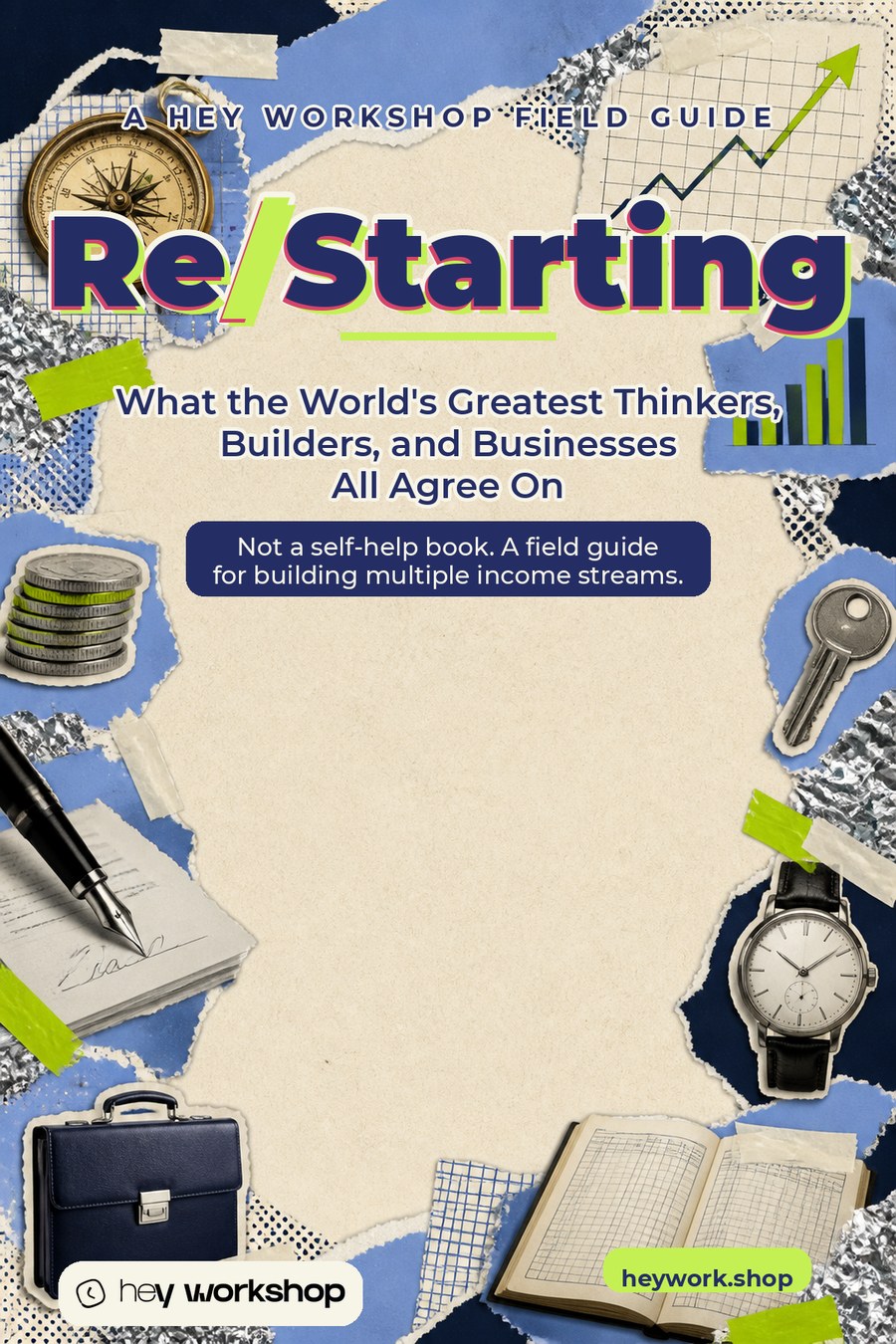
What the world's greatest thinkers, builders, and businesses all agree on
A principle only earned a page in this book when eight unrelated fields arrived at it independently. Not a self-help book. A field guide for starting, or starting again, and for building income that does not depend on one thing going right. The nine dollars buys it three ways at once: the designed PDF, a Kindle and Apple Books edition, and the full audiobook. And it ships with The First Client Kit, the practical half: how to get your first paying client, deliver it well enough to be asked back, then turn one into three.
 $9
$9
Here is what you are actually buying, counted and checkable:
141 PAGES, 13 CHAPTERS: from why people stall, through identity, decisions, systems, and learning, to value, income streams, reputation, and the long game.
12 CONVERGENCE TABLES: the signature device. One page per chapter showing where psychology, neuroscience, philosophy, economics, business, investing, literature, and history land on the same conclusion.
212 NAMED SOURCES: researchers named in the sentence, references at the back of every chapter. Nothing invented, and nothing dressed up as science that is not science.
A TOOLKIT APPENDIX: the mental models by chapter, the frameworks by situation, a reading roadmap by discipline, and the one-page version of the whole book.
THREE FORMATS, ONE PRICE: the designed 141-page PDF, a Kindle and Apple Books edition (EPUB plus a native AZW3), and the full audiobook, 15 chaptered MP3s, each with its own cover art.
PLUS THE FIRST CLIENT KIT: three more files, same nine dollars. An 88-page playbook, a 10-tab toolkit, and 108 copy-and-paste scripts for winning and keeping your first paying client.
EVERY CHAPTER ENDS IN A MOVE: reflection questions and concrete exercises, not journaling prompts. You close the chapter with something to do this week.
You have read the advice. You still have not started.
That gap is not a character flaw, and it is not a motivation problem. It is what happens when every book you pick up hands you one person's system and asks you to trust it. One founder's story. One researcher's model. One method, sold hard, with the failures left out.
The usual book
One author, one system, take it or leave it.
- ✗Built on a single field, so the blind spots come along for the ride
- ✗Founder stories told backward, with the luck edited out
- ✗Psychology cited long after the replication crisis said to be careful
- ✗Feels great on Sunday, gone by Wednesday
- ✗You cannot tell which parts are evidence and which are the author's taste
This one
Eight fields, and only what they agree on.
- ✓A principle earns a page only when unrelated fields reach it separately
- ✓Every claim labelled: research, historical account, philosophy, literature, or opinion
- ✓Weak findings named as weak, including ones this book chose not to lean on
- ✓Understanding first, because motivation fades and understanding compounds
- ✓Every chapter ends in something you can run this week
Convergence, not authority, is the filter
One field agreeing with itself proves little. Psychology has a replication problem. Founders misremember their own stories. Philosophers contradict each other for sport. But when a Stoic writing in exile, a behavioral economist running controlled experiments, a neuroscientist tracing dopamine circuits, and a bicycle mechanic building the first airplane all reach the same conclusion without ever reading each other, you are looking at something structural about human beings.
Eight fields, every chapter. Psychology, neuroscience, philosophy, economics, the business record, investing, literature, and history. Each one gets its own section, in its own voice.
The agreement gets its own page. A convergence table lays the eight verdicts side by side, so you can see the overlap yourself rather than take our word for it.
Then, and only then, the instruction. Practical application comes after the explanation, because knowing why something works is what makes it survive a bad week.
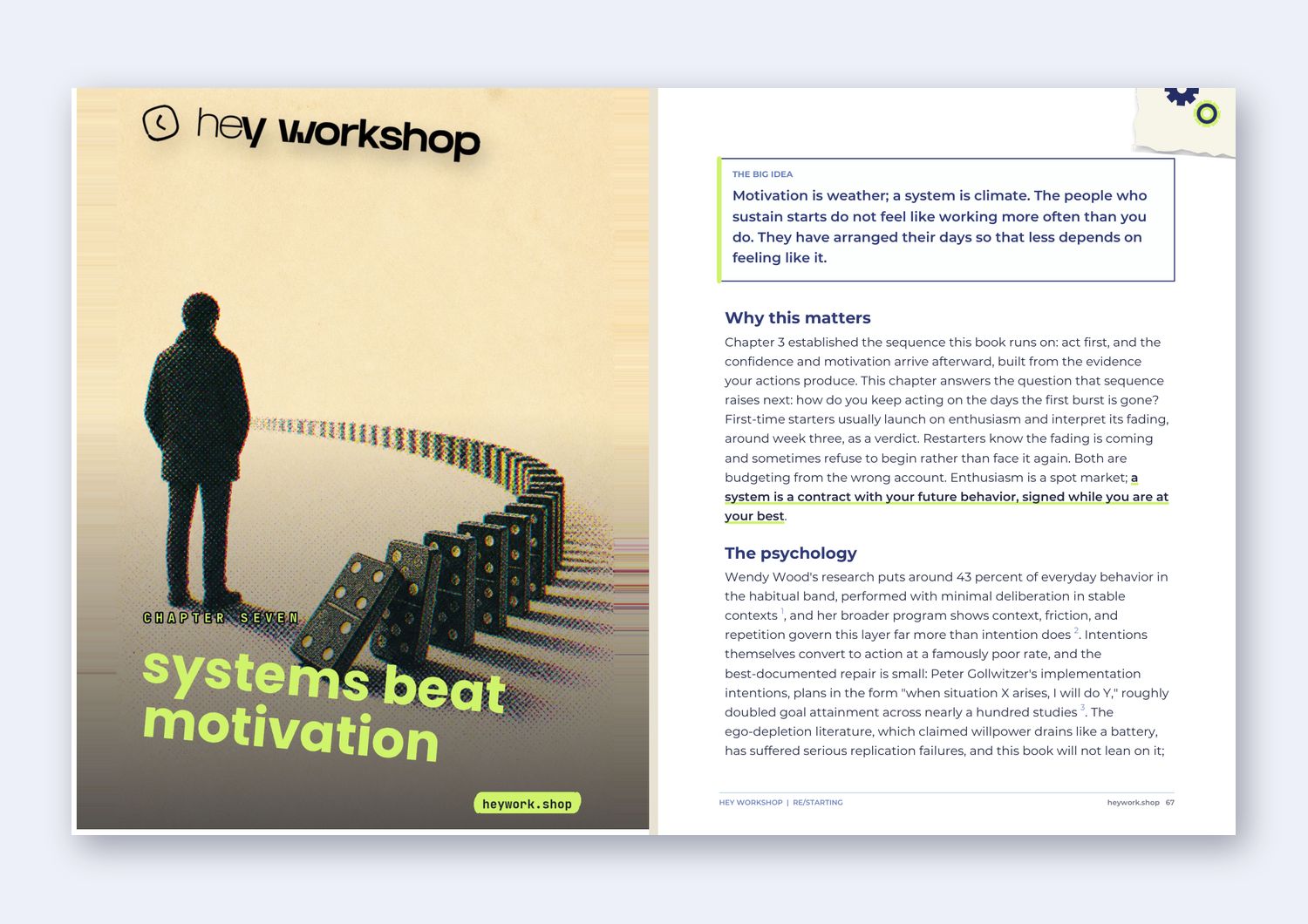
A real page from chapter seven
This is not a mock-up. It is the convergence table from the chapter on building systems instead of chasing motivation, exactly as it appears in the book.
| Psychology | Nearly half of behavior is habitual. If-then plans double follow-through. Context beats intention. |
| Neuroscience | Automatization needs stable cues and repetition, and marginal friction steers the economizing brain. |
| Philosophy | Marcus Aurelius, Benedict, and Zen: schedule the practice so it survives the practitioner's mornings. |
| Economics | Defaults govern outcomes at scale, and unscored behavior extinguishes. |
| Business | Toyota, aviation, and surgery: build quality into the process, and assume normal people on variable days. |
| Investing | Written rules executed without mood beat discretion for most people over most windows. |
| Literature | Sam's logistics carry the mission that Frodo's will alone could not. |
| History | Franklin's schedule and Apollo's procedures: the same pattern, from a kitchen table to a moonshot. |
Twelve of these, one per chapter. Each backed by the named research, sources, and stories in that chapter's reference list.
Eight of the references, read aloud
Every claim in the book is credited to a named source, and the audiobook reads them back to you. Here are eight, from Roman letters to shareholder letters. Press play and hear the exact line from the narration.
Seneca
Letters to Lucilius, Letter 13
"We suffer more often in imagination than in reality."
Hear it in chapter 02 · The Psychology of Beginning AgainThe Count of Monte Cristo
Alexandre Dumas, 1844
"The novel's engine is what a person does with a life that must be rebuilt from zero, and Dumas's answer is patient, systematic action."
Hear it in chapter 02 · The Psychology of Beginning AgainEast of Eden
John Steinbeck, 1952
"Steinbeck built East of Eden around a single Hebrew word, timshel, 'thou mayest,' the grant of choice that means nothing until enacted."
Hear it in chapter 03 · Action Before ConfidenceLetter to Shareholders
Jeff Bezos, Amazon, 2015
"Most decisions are 'two-way doors,' reversible, and should be made fast by individuals, because the cost of acting and correcting is lower than the cost of deliberating."
Hear it in chapter 03 · Action Before ConfidenceAtomic Habits
James Clear, 2018
"Every action is a vote for a type of person, and identities are built by majorities, not unanimity."
Hear it in chapter 04 · Identity Is the Operating SystemCrime and Punishment
Fyodor Dostoevsky, 1866
"Raskolnikov's theory that he belongs to an extraordinary class licenses the murder, and the novel is the long collapse of that identity under the weight of his own behavior."
Hear it in chapter 04 · Identity Is the Operating SystemPrinciples
Ray Dalio, 2017
"Decision rules written down, stress-tested by disagreement, and weighted by the believability of the person arguing."
Hear it in chapter 06 · Decision-Making Under UncertaintyThe Checklist Manifesto
Atul Gawande, 2009
"None of these systems assume weak people. They assume normal people, variable days, and stakes."
Hear it in chapter 07 · Building Systems Instead of Chasing MotivationEight of 212. The other 204 are named in the sentence and listed at the back of their chapters, the same way.
Four movements: stuck, think, build, sustain
The book moves in order. Why you are stuck, then how to think, then what to build, then how to keep it. Read it straight through or open the chapter that matches this week.
Why Most People Never Restart
the problem is not where you think it is
The Psychology of Beginning Again
fear, sunk costs, identity, and learned passivity
Action Before Confidence
why the sequence everyone assumes is backward
Identity Is the Operating System
habits, self-efficacy, and the story you run on
Thinking in Decades, Acting Today
compounding, opportunity cost, and the future you cannot feel
Decision-Making Under Uncertainty
probabilities, mental models, and the traps with names
Building Systems Instead of Chasing Motivation
routines, environments, feedback loops, and constraints
Learning Faster Than the Competition
deliberate practice, error feedback, and the loop that compounds
Resilience and Antifragility
stress, setbacks, recovery, and systems that gain from disorder
Creating Value Others Will Pay For
problems, prices, and the discipline of being useful
Building Multiple Income Streams
diversification, sequence, and compounding without chasing
Relationships, Reputation, and Networks
trust, weak ties, and the asset that compounds socially
The Long Game
meaning, stewardship, and momentum over decades
The Toolkit
mental models, frameworks, and the reading roadmap
Read it, load it, or press play
Nine dollars buys the book three ways, together, not as upsells. Read the designed pages at a desk. Send it to your Kindle or open it in Apple Books. Or put your headphones on and take a chapter for a walk. Same book, three doors in.
The PDF
The full-design edition: chapter opener art, the convergence tables, big-idea boxes, and references at the back of every chapter. Reads on a laptop, a tablet, or a phone. The spread above is real, straight from chapter seven.

Kindle and Apple Books
A true ebook edition with a clickable contents page and citations that jump to their sources. Open the EPUB in Apple Books, or send it to your Kindle at amazon.com/sendtokindle. A native AZW3 file is in the box too, for sideloading over USB.

The audiobook
The whole book, read aloud. One MP3 per chapter, each tagged with its own cover art, so your phone, your car, and your player show the right art at the right chapter. No app, no credits, no subscription. Press play and walk.
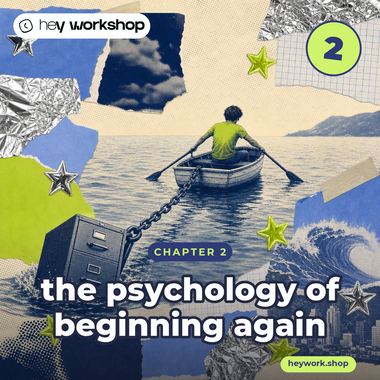
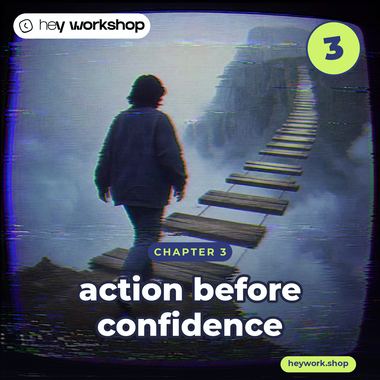
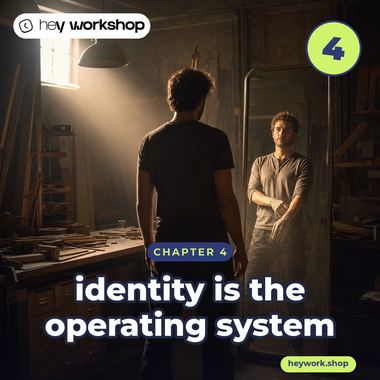
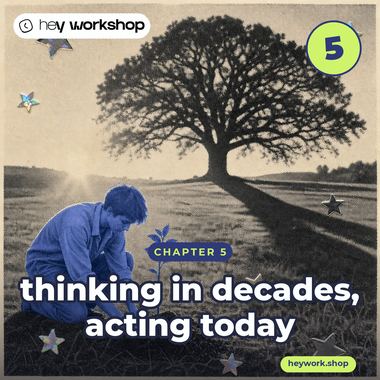
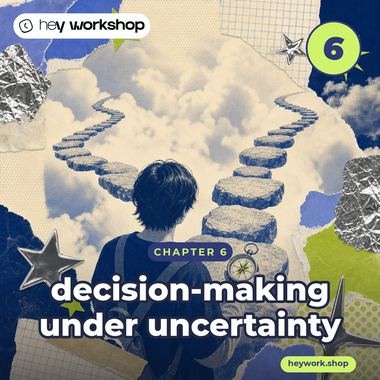
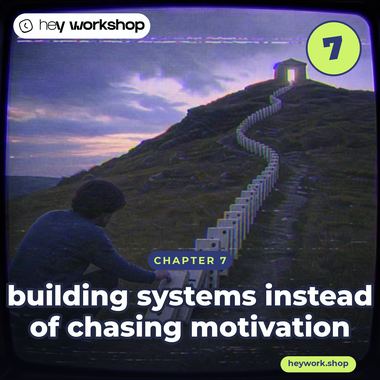
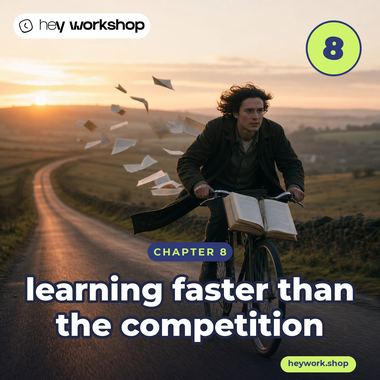
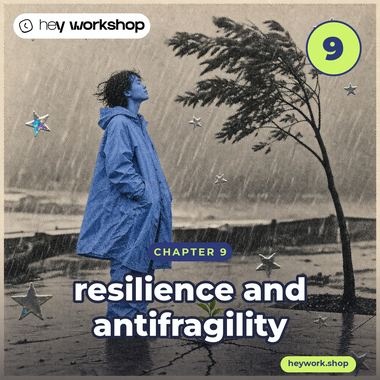
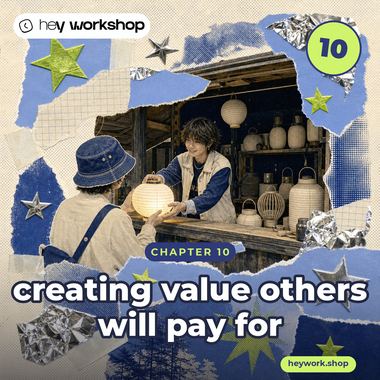
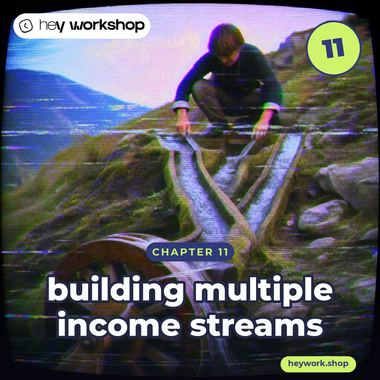
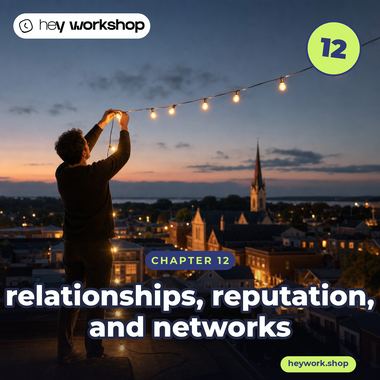
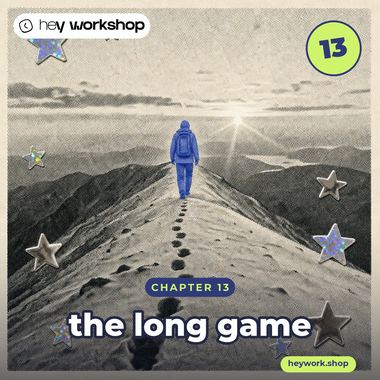
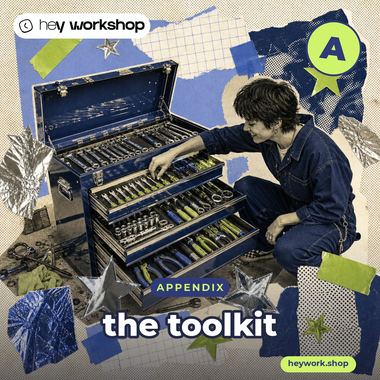
Every audiobook chapter has its own cover art · all 15 tracks are in the box
The book explains it. The Kit does it.
A field guide that leaves you understanding yourself better and nothing else is only half a job. So the $9 also includes The First Client Kit: three files with one promise. Get your first paying customer, deliver it well enough to be asked back, then turn one into three.
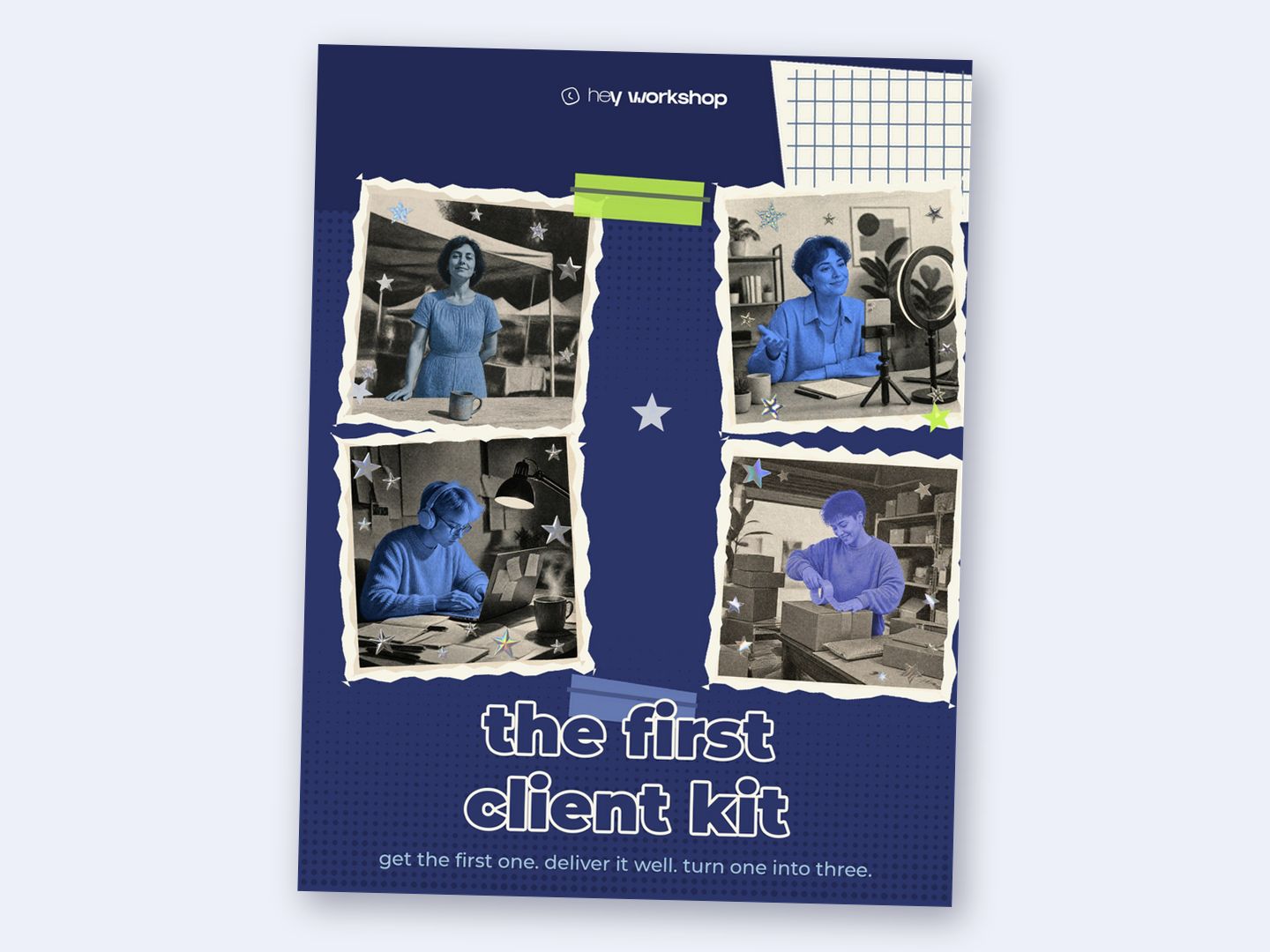 Kit file 01
The Playbook
Where your first buyer actually comes from, what to sell before you have a portfolio, how to price with no track record, and what to do in the week nobody replies. Written once for anyone selling something of their own, with the same example run four ways: the maker, the agency owner, the scriptwriter, the shop owner.
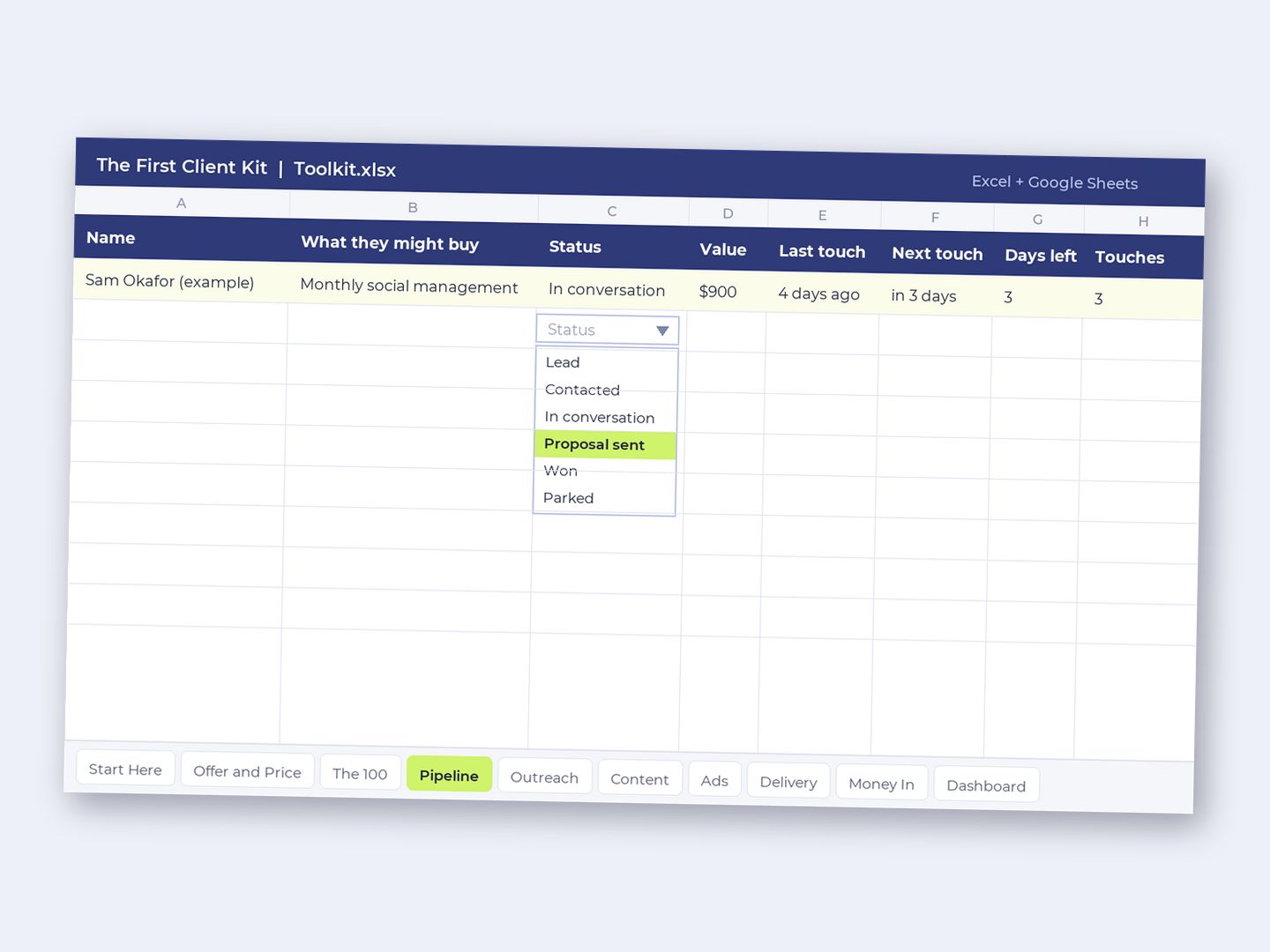 Kit file 02
The Toolkit
The spreadsheet that keeps it honest: your offer and price, The 100 list, a pipeline that tells you who to chase today, outreach and content trackers, delivery, money in, and a dashboard that adds up. Works in Excel and in Google Sheets. Every formula was audited before it shipped.
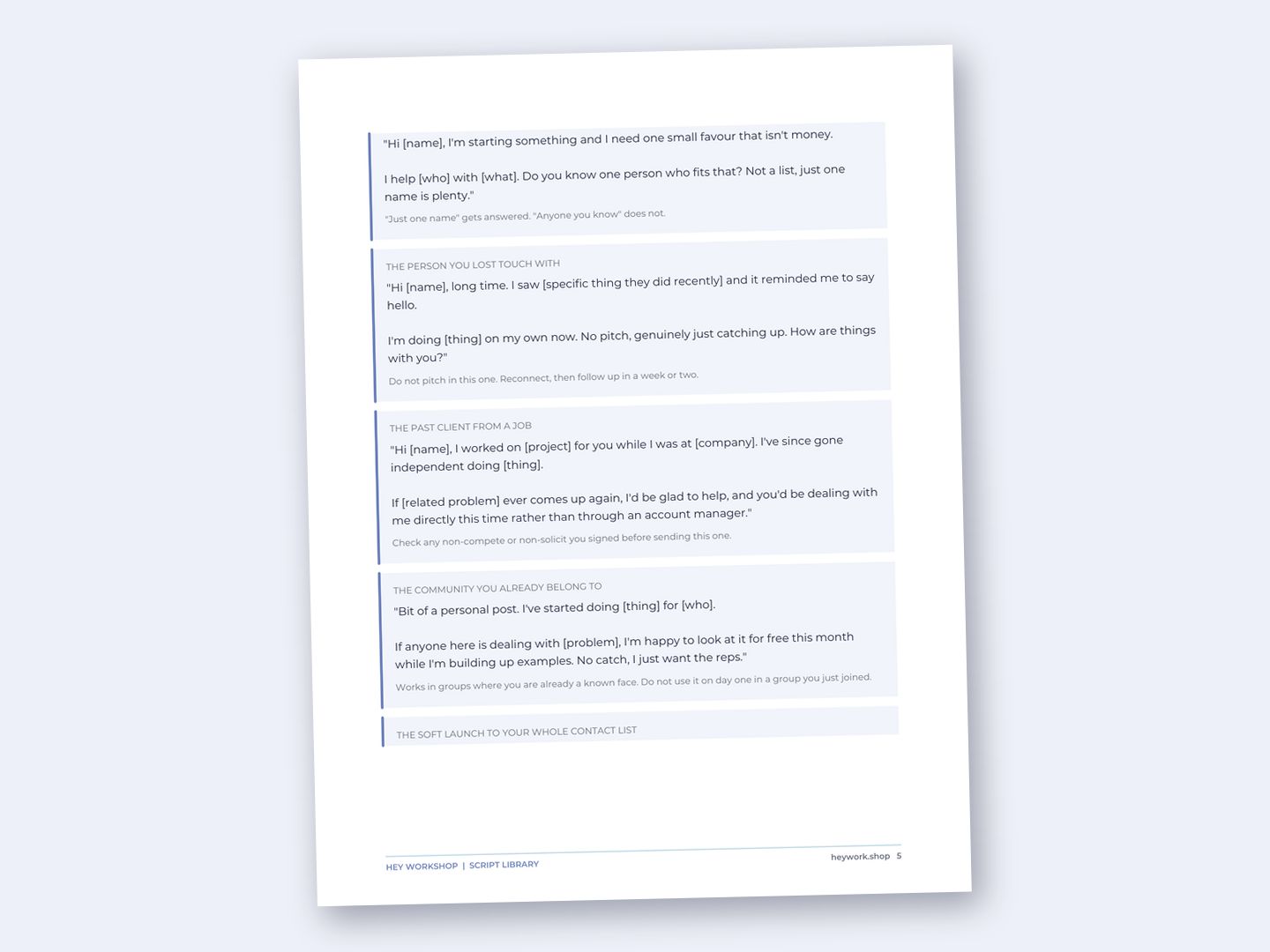 Kit file 03
The Script Library
The words, for when you know what to do and still cannot make yourself type it. Warm outreach, cold email, DMs, follow-ups, the sales conversation, pricing and proposals, the nine objections you will actually hear, onboarding, and asking for the referral. Copy it, swap the brackets, send it.
Seven files in total, three formats of the book plus the Kit · nine dollars · one payment
Written for two readers at once
Starting and restarting share most of their machinery, and where they differ, the book says so on the page instead of pretending you are all the same person.
The first start
You have never begun
- ✓A folder of saved ideas and nothing shipped
- ✓Waiting to feel ready, which chapter 3 explains is the wrong order
- ✓Facing the unknown, and reading your own nerves as a verdict on your ability
- ✓Wanting to understand how this works before betting anything on it
The fresh start
You have stopped once already
- ✓A business, a career, or a practice that ended, and a quiet reluctance to try again
- ✓Sunk costs you can feel, which is a different problem from the unknown
- ✓Trained passivity after a stretch where effort stopped changing outcomes
- ✓Enough experience to spot a book that is bluffing, so this one shows its sources
What this book is not
Worth knowing before you spend nine dollars, so nobody feels sold to.
It explains the forces underneath starting and earning. If you want the step-by-step machine for a business of one, that is The Founders Edition: Business OS, and it is a different, bigger purchase.
The goal is understanding, not a rush. Nothing here will make you feel invincible on a Sunday night. It is built to still be useful on a Wednesday.
This is synthesis. The work of naming where independent fields agree, with every source credited so you can go read the originals.
No earnings claims, here or in the book. What you do with any of it depends on your market, your skills, and your work.
Nine dollars. Once.
Priced so that thinking about it costs more than buying it. That is deliberate. We would rather you read the thing.
Re/Starting + The First Client Kit
The whole book in three formats, plus the three files that turn it into a first paying client. One checkout, seven files, nine dollars.
- ✓141 pages, 13 chapters, plus the toolkit appendix
- ✓Three formats: the designed PDF, the Kindle and Apple Books edition (EPUB + AZW3), and the full audiobook
- ✓The audiobook: 15 chaptered MP3s, each with its own cover art
- ✓12 convergence tables, one per chapter
- ✓212 named sources, with references at the back of every chapter
- ✓Reflection questions and concrete exercises throughout
- ✓The First Client Kit Playbook: 88 pages, 21 chapters
- ✓The First Client Kit Toolkit: 10 tabs, Excel and Google Sheets
- ✓The First Client Kit Script Library: 108 copy-and-paste scripts
- ✓Seven files, yours to keep, plus free updates to everything in the box, forever
Two minutes from now you can be reading chapter one.
GUARANTEE
Read it. If it does not earn its nine dollars, we refund you.
Take 30 days. Read the introduction and chapter three, run one exercise, and see whether you understand your own stalling better than you did. If not, email us and we will refund every cent. No forms, no guilt trip, and you keep the files.
Everything else you're wondering
What is a convergence table, exactly?+
One page per chapter that lays out what eight unrelated fields concluded about that chapter's principle, side by side, in their own terms. You see the agreement in one view and judge it yourself. There is a real one on this page, from chapter seven.
Is this a self-help book?+
No, and the subtitle says so on purpose. Self-help usually sells one person's system and a feeling. This explains why humans stall and what people who restart well repeatedly do differently, with the research named and the weak evidence flagged as weak.
How is it different from The Founders Edition: Business OS?+
Different job. Re/Starting is about the forces underneath beginning again and building income that does not rest on one thing. The Founders Edition: Business OS is the complete operating machine for running a business of one: the playbooks, the toolkits, the contracts, the AI staff, and the numbers. Read this first if you have not started. Step up to that when you have.
Do I need a business to get anything from it?+
No. The chapters on fear, identity, decisions, and systems apply to a career, a practice, a fitness habit, or a craft, and then extend naturally into earning. Chapters 10 and 11 are where it turns commercial.
Are the citations real?+
Yes, and this mattered enough to be a rule during writing: no citation was invented, and where a source could not be verified the claim was cut or marked as interpretation. Researchers are named in the sentence and full references sit at the back of every chapter, 212 of them. Eight of them are playable on this page, with the exact lines from the audiobook.
What exactly is the First Client Kit?+
Three files that ship free with the book, because understanding why you stall is only useful if the next step is in reach. An 88-page playbook on finding and closing your first buyer, a 10-tab toolkit spreadsheet that tracks the whole thing, and 108 scripts covering 15 situations, from the first warm message to asking for the referral. The book is the thinking. The Kit is the doing.
Is the Kit the same thing as the Clients OS?+
No. The Kit is about your first client, the one that proves this is real. The Clients OS is about a pipeline that keeps producing them once you know it works. There is honest overlap and we did not water the Kit down to protect the bigger product.
What formats do I get, and how fast?+
Seven files. The book comes three ways: the designed 141-page PDF, an EPUB for Apple Books and Kindle plus a native Kindle AZW3, and the full audiobook as 15 chaptered MP3s. The First Client Kit adds two PDFs and one spreadsheet that opens in Excel or Google Sheets. You check out on Gumroad and download everything immediately.
Is there an audiobook?+
Yes, and it is included in the nine dollars, not sold separately. The whole book, narrated, as 15 MP3s, one per chapter, each tagged with its own cover art so it looks right in your phone, your car, and any player. No audiobook app, no credits, no subscription. Download it once and it is yours.
How do I get it onto my Kindle?+
The Kindle app does not open EPUB files directly, so use Amazon's own free door: go to amazon.com/sendtokindle, drop the EPUB in, and the book appears in your Kindle library on every device. Prefer a cable? The included AZW3 file sideloads straight onto a Kindle over USB. Apple Books opens the EPUB directly, no steps at all.
Is there a subscription?+
No. Hey Workshop does not sell subscriptions. You pay nine dollars once, the file is yours, and any future update to the book is free.
Will this make me money?+
Nobody honest can promise that, so we do not. This book gives you the understanding and the exercises. What happens next depends on your market, your skills, and the work you actually do.