
Your next client is probably not a stranger
Cold outreach is the last resort, not the first move. Here are the four ponds that are actually full, and what to say in each one.
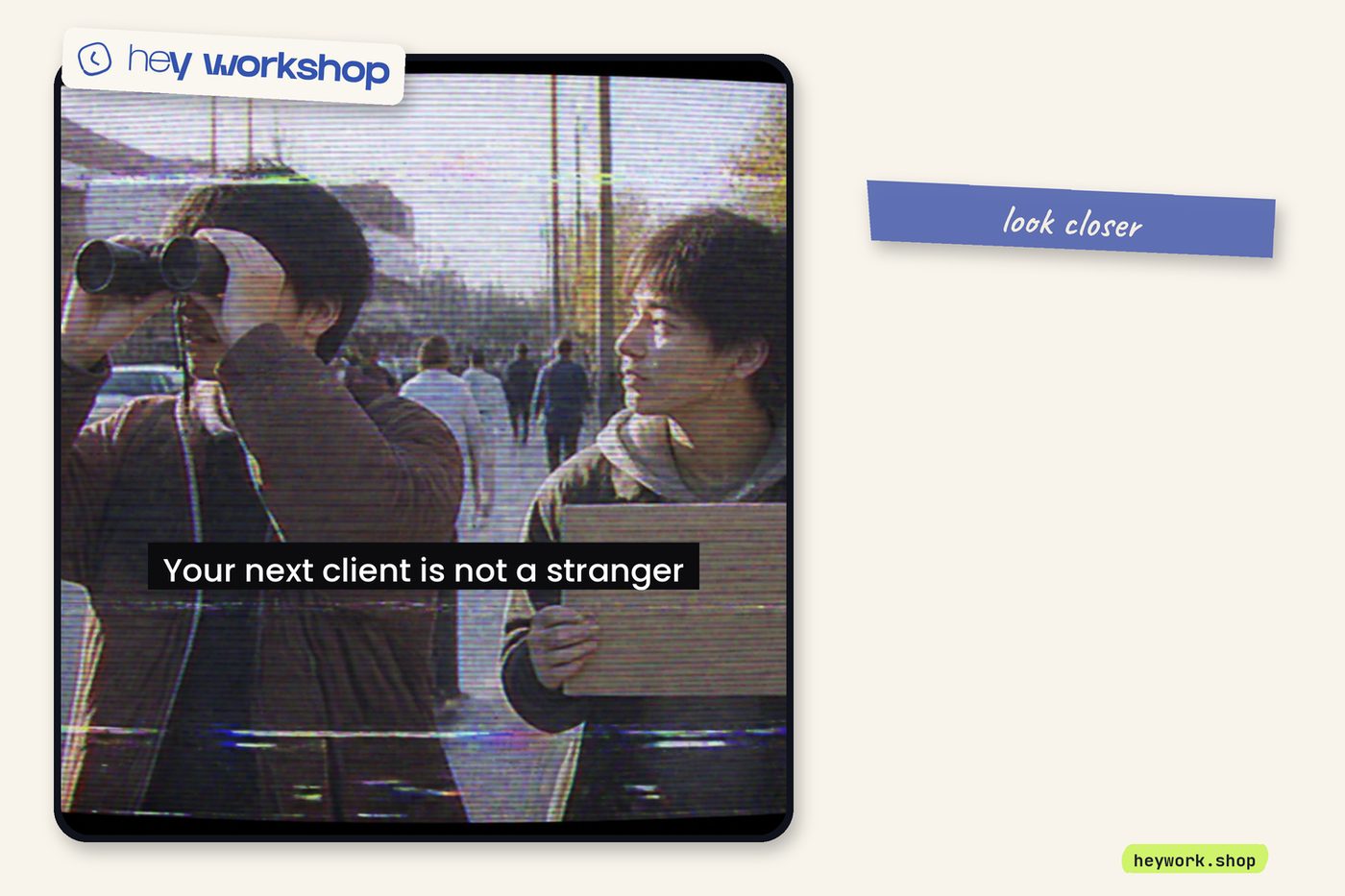
It usually happens on a Sunday night.
You open a spreadsheet. You paste in a hundred names of people who have never heard of you. You start writing emails that begin with “Hi, I hope this finds you well.” Three hours later you close the laptop feeling like you did something real. Then nothing happens for eleven days, and the one reply you get is a no.
That is not a discipline problem. It is a pond problem. You are fishing in the emptiest water on the map, and you are doing it first instead of last.
So here are the real numbers, and then the four ponds that are actually full.
What cold outreach actually costs
India Amos is a freelance writer who has been tracking her own pitching data all year, and she publishes it, which almost nobody does. The average reply rate on a cold email is about 3 to 4 percent, and her own numbers match that. Read it again, because the word is reply, not sale. Send a hundred emails, get three or four humans to type anything back at all, and most of those will be a polite no.
Warm outreach, the same message sent to someone who has a vague idea of who you are, runs at 10 to 34 percent. Same writer. Same skill. Roughly the same email. The only thing that changed is whether the person already knew her name.
And when she lists where her most consistent, highest paying clients have come from, she does not say cold email. She says referrals. Every time.
So cold outreach is not evil and it is not useless. It is just the most expensive way to buy one yes, and most of us reach for it first because it feels like work. It is visible, it is countable, and it lets you be busy without having to be seen.
The marketplaces are not the shortcut either
The other thing everyone tries first is a marketplace. Build the profile, sit in the queue, wait to be picked.
Jonas Braadbaart spent seven years running a business of one, and he just published an honest look at what the marketplaces did in 2026. On Upwork last year, demand for writing work fell 32 percent year on year. IT and networking fell 27 percent. Translation fell 20 percent. Web and mobile development fell 13 percent. The number of active buyers on the platform peaked back in 2023 and has been sliding ever since.
His conclusion is the part worth keeping. The thing that protects a business of one is no longer just skill. It is clients and distribution. Which is the technical way of saying: the people who already know you, and the places they can find you.
So if the two things you would reach for first are both the weakest water on the map, where is the next client actually standing?
Sarah Ashton did something I wish more people would do. She went back through her whole first year of freelancing and mapped every single lead, all 39 of them, including the ones that went nowhere. Not the highlight reel. The ghosts and the dead ends too.
Her takeaway was not a tactic. She said the exercise turned out to be about conversations, and about putting yourself in enough rooms for the right people to find you.
That is the whole thing. So here are the four rooms, in the order you should walk into them.
Pond one. The people who have already paid you.
The easiest yes in your business is a second yes. They know your rate. They know what you are like to work with. They already survived the part where they had to trust a stranger with money. Every scary conversation you would have to have with a cold prospect has already happened with this person, and they said yes anyway.
Most people never go back, because the last project ended cleanly and reaching out now feels like begging. It is not begging. It is the check in a professional sends.
What to send looks something like this. Remind them of the specific thing you made. Tell them one thing you have noticed since. Ask if it is useful. “Hey, that pricing page we rewrote in March, is it still holding up? I was looking at your new product line and had a thought about it if you want it.”
Notice you asked for nothing. That is exactly why it works.
Pond two. The people who have watched you work.
Old colleagues. Old bosses. The person who sat two desks over. They have seen you do the job, which is the one thing a cold prospect can never know about you and would not believe if you told them.
You do not pitch these people. You tell them a fact: here is what I do now, here is who I help. Then you let it sit. This pond is slow and generous. People do not remember you when your email lands, they remember you when a need turns up, and the gap between those two things can be months. That is not failure. That is how it works, and it is why you plant this one early and often.
Pond three. The people who serve your client but do not do your job.
This is the most underused water there is, and I would go here today if I needed work this month.
A designer needs a writer. A web developer needs a photographer. A bookkeeper hears about every business in town that just got funded. They stand right next to your client, and they are not competing with you for the work, which means recommending you costs them nothing and makes them look good.
India’s first referral happened exactly like this. She was a writer, she talked honestly about her business with a designer she had just met, and the designer had a client who needed an SEO writer. They have worked together for years since.
So make a list of five people who sell something else to the same person you want to sell to. Then go be useful to them first, before you need anything.
Pond four. The people who already asked you a question.
Someone replied to your post. Someone sent a DM asking how something works. Someone at a barbecue said “wait, so how do you actually do that?” These people raised their hand. They told you they are interested, and you almost certainly did not follow up, because it felt too small to count as a lead.
Answer the question properly and for free. Then say, plainly, what you do about that problem for money. That is the entire conversion. No funnel required.
So what is cold outreach actually for?
It is the pond you stock, not the pond you eat from tonight. Send the cold emails, by all means. Just understand what you are buying: in eight or ten months, some of those strangers become warm, and one of them turns into a project. That is a real and worthwhile trade. It is simply not a plan for August.
If you need work this month, and a lot of people reading this do, start where you are already known and work outward. Pond one, then two, then three, then four. Cold is where you go when the first four are genuinely empty, and I have never met a freelancer whose first four were genuinely empty. Usually they are just uncomfortable.
Because that is the honest part nobody says out loud. Cold outreach is not popular because it works. It is popular because it is anonymous. Nobody you know watches you fail at it. Writing to a hundred strangers costs you nothing but time. Writing to one old client costs you the risk of them seeing that you need the work.
That feeling is not a signal to stop. It is just the toll on the fastest road you have.
One thing to do this week
Pick one person from pond one, from memory, without opening a spreadsheet. Send them the check in. Ask for nothing.
Then tell me what happened, because I would genuinely like to know. Which pond have you been avoiding, and why? My guess is pond one, and my guess is the reason is pride. Hit reply and prove me wrong.
If this was useful, subscribe and I will send the next one. And if you want the plain map for the rest of it, from a fuzzy idea to a paying business, that is what we build at heywork.shop.
This piece credits India Amos, Jonas Braadbaart, Sarah Ashton. The links go to the original on our Substack, where you can follow them on through.
First published in the Hey Workshop newsletter. Read it on Substack or subscribe there.